Introduction
Diving is an amazing activity. It provides access to underwater environments that few have ever witnessed, and many areas are still unexplored. You’ll encounter a variety of critters ranging from the colorful to the strange, and if you’re lucky, the rare encounters.
It’s also an activity that involves specialized equipment, skillset, physics, and environmental knowledge. For these reasons it’s a sport that requires training, good physical health, maturity, and discipline in order to be done safely.
In this section you’ll learn what diving is, the process of getting certified, and the risks associated with diving.
What is SCUBA Diving?
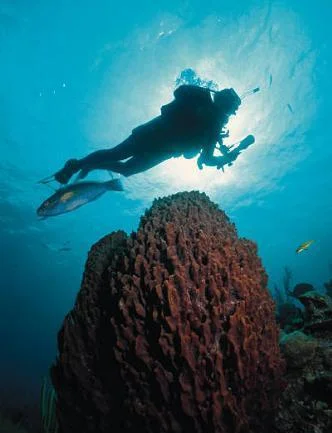
SCUBA stands for “self contained underwater breathing apparatus.” This refers to the regulator, air cylinder, and other equipment that allows a diver to breathe underwater. Its simplicity and dependability make it the system of choice for recreational divers.
SCUBA diving allows you to stay underwater for extended periods of time. Because you aren’t in a rush to get back to the surface, you’ll be able to relax as you closely examine tiny creatures living on a reef or gaze out on a school of fish swimming overhead.
Divers enjoy the sport for various reasons. Most are interested in viewing marine life in their natural environment. Others are interested in exploring underwater wrecks or caves. However, no matter what the objective of the dive is, all divers enjoy the opportunity to explore a whole new world.
What Is Skin Diving?
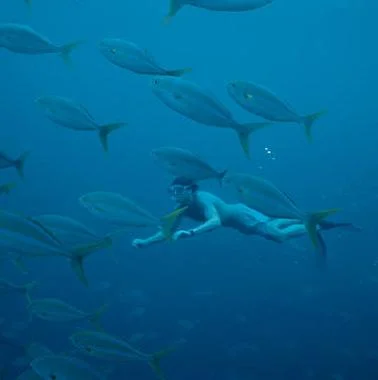
The term “skin diving” refers to breath-hold diving, and only requires a mask, snorkel, fins, and possibly a wetsuit and weight belt. The length of time you can spend underwater is limited to the time you can safely hold your breath.
Many SCUBA divers become more interested in skin diving as they gain experience. Two reasons for its popularity are simplicity and silence. Skin divers wear very little gear, and there are no loud bubbles to scare fish away.